
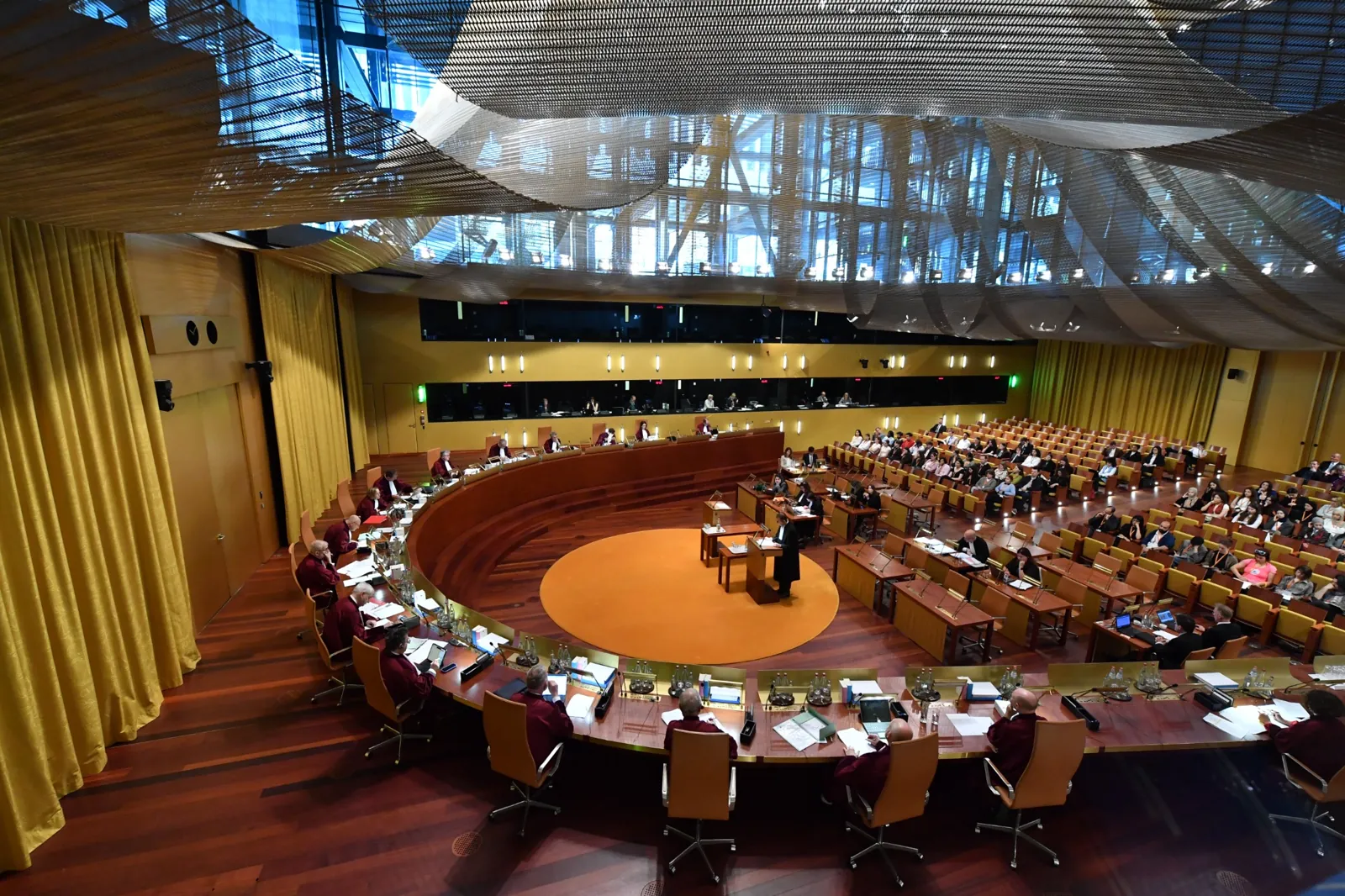
The International Court of Justice has found Myanmar responsible for genocide. The ruling establishes state responsibility, while leaving protection, individual prosecutions and the practical delivery of reparations as demanding tasks ahead.
A judgment can change the legal status of a history without immediately changing the conditions in which its survivors live. The International Court of Justice’s ruling on Myanmar brings that distance into focus. Conduct long investigated, documented and contested has now been assessed through a final judicial decision on state responsibility. For the Rohingya, recognition has acquired a new authority. Whether it produces greater security and meaningful redress will depend on decisions extending well beyond the courtroom.
On 19 November, the Court found that Myanmar committed genocide against the Rohingya in northern Rakhine State during the 2017 clearance operations. Reuters independently reported the finding that day. The event under examination therefore occurred nine years before the judgment; the news this week is the Court’s determination, rather than the first disclosure of the violence. Maintaining that chronology preserves the distinction between documenting an atrocity and establishing responsibility through legal proceedings.
The proceedings were brought by The Gambia in 2019 under the Genocide Convention. That fact gives the case a significance beyond the relationship between two states. A country geographically distant from the victims used a treaty mechanism to seek accountability for obligations whose protection is a shared concern. International law’s practical reach depends partly on whether states are prepared to use those mechanisms when their own territory is not the immediate setting of the harm.
The Court’s task required more than establishing that terrible violence had occurred. Genocide involves a specific legal requirement concerning the intention to destroy a protected group, in whole or in part. The judgment examined evidence and the inferences that could reasonably be drawn from it. Its conclusion should consequently be reported as a judicial finding, rather than reduced to either a political label or a synonym for every form of mass violence.
The decision also concerns the state’s obligations to prevent and punish genocide and to enact the necessary legislation. The UN Secretary-General’s statement described failures extending beyond the original acts, including obstacles to effective investigation. Those obligations explain why accountability cannot be confined to a declaration about the past. A state’s response to evidence, suspects and survivors is itself part of the legal question.
A separate distinction concerns individual criminal responsibility. The ICJ determines disputes between states; its judgment is not a criminal conviction imposing a prison sentence on a named commander. Proceedings against individuals require their own jurisdiction, evidence and procedural safeguards. Confusing the two can create false expectations about what has just happened and obscure the work still required to bring particular suspects before a competent court.
Evidence preservation is an especially consequential part of that work. The Independent Investigative Mechanism for Myanmar describes the witness material and analytical reports it supplied to the proceedings. Such work is less visible than the reading of a judgment, but its value accumulates over years. Testimony must be recorded carefully, records must retain their provenance and sensitive information must be handled without exposing witnesses unnecessarily.
The broader lesson is that documentation is a form of public infrastructure for justice. A photograph without a reliable account of where it came from may be difficult to assess. A witness statement gathered through a demanding method can remain usable long after public attention has shifted. This does not make every collected item conclusive. It makes scrutiny possible and allows different pieces of evidence to be examined together.
The Court also found a breach of its earlier requirement to preserve evidence. That finding highlights a particular danger in prolonged accountability processes: the material needed to establish what happened can be destroyed while the proceedings continue. Time is therefore not merely a delay endured by victims. It can alter the evidential conditions under which their claims will eventually be heard.
Reparations create another set of questions. The judgment addresses restitution and compensation, while reserving the amount and modalities of compensation or other reparation for a subsequent phase. Myanmar is required to report within two years on relevant measures. A finding that reparation is owed should not be mistaken for an announcement that payments have already been calculated, funded or delivered.
The difference between those stages matters to survivors. A legal entitlement can remain remote if people cannot establish a claim, obtain documents or access an effective mechanism. Administrative design will shape whose losses become visible and how different injuries are treated. It should accommodate people whose records were lost through the very conduct for which redress is sought, while maintaining procedures capable of identifying and correcting mistakes.
Return raises equally demanding issues. The remedies described by the Court include safe, voluntary and dignified return and family reunification. These terms cannot be satisfied simply by moving people across a border. Their practical meaning concerns the conditions to which people return, the choices available to them and their protection afterwards. A return statistic alone would offer an inadequate measure of compliance.
For host communities and humanitarian organisations, the judgment does not remove immediate responsibilities. Education, healthcare, shelter and protection remain necessary while legal remedies develop. Recognition of a right to return cannot responsibly be used as evidence that displacement has already become temporary in a practical sense. People’s needs continue on a different timetable from the proceedings intended to address their causes.
Businesses should also read the ruling within its actual scope. It does not create a universal commercial ban by itself. It does strengthen the importance of understanding relationships, locations and activities connected with serious abuses. A company’s relevant questions concern its own operations and obligations, rather than whether a judicial headline can be converted into a single rule covering every transaction involving the country.
The political response will inevitably include disagreement. Such disagreement should be assessed through its substance. A state’s rejection of an adverse judgment does not give its account the same evidential status as the Court’s findings. At the same time, reporting should explain what the Court decided, the legal route it used and the limits of that route. Authority is strengthened by precision, not by exaggerating its reach.
The next useful developments will be observable: changes in domestic legislation, credible investigations, cooperation with accountability bodies and concrete steps towards remedies. Monitoring should connect each obligation with evidence of action. General assurances will carry less weight than procedures survivors can use and protections whose operation can be independently examined.
The judgment has changed what can be said with judicial authority about Myanmar’s responsibility. Its enduring importance will depend on whether that authority becomes useful to the people whose experiences gave rise to the case. Justice now enters a phase in which legal recognition must be translated into institutions, protection and redress, without allowing the force of the finding to fade into another unfulfilled promise.
The Deeping Editorial Team
Credits: photo © European Union 2025